
Can you believe it is already April? That gives us about one month left of pool testing for the semester. So, without further delay, let’s jump into it.
04/04/2026
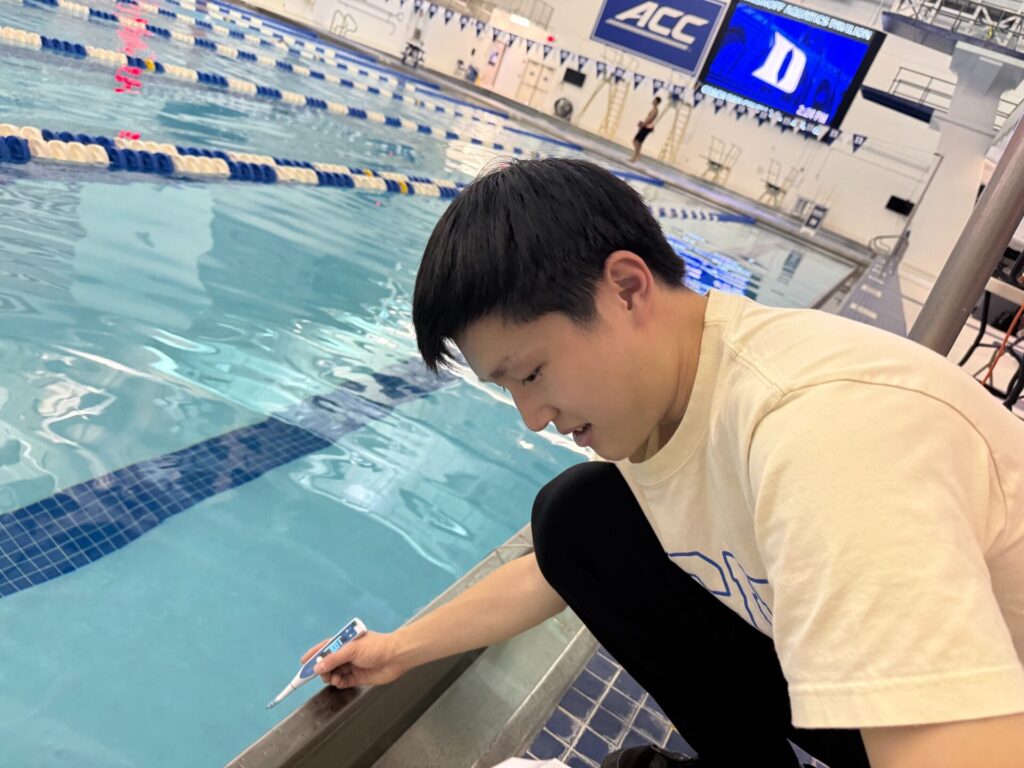
Following up from our previous pool test, we decided to collect DVL data from Oogway. We had our swimmers push the robot throughout the pool while we recorded raw data, as well as general depth measurements. We hope to analyze these files with the help of our DVL vendor, Teledyne, as we continue to work on our robot state measurements. We also collected some salinity measurements of the pool for DVL configuration purposes (spoiler: the pool is not salty).
This pool test, our second robot, Crush, finally joined us once again! At a previous pool test (02/28/2026, unfortunately no blog for this one), Crush’s battery capsule flooded after submerging in the water. We had imagined this possibility at the time, and put the robot in without powering the electrical stack. We were able to relatively minimize damage at the time, but issues with our thruster escs continued to delay Crush testing. Thankfully, electrical has been hard at work debugging this issue, and mechanical has been hard at work with new buoyancy blocks for Crush as well as testing for any additional leaks.
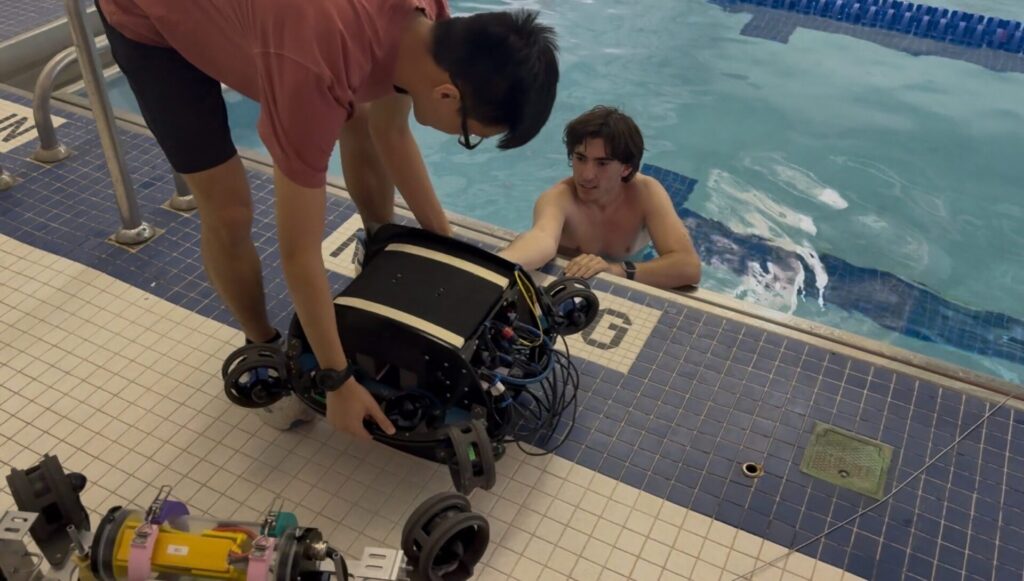
This time, we did not observe any leaks in either capsule, so we powered on the robot and worked on debugging our new configuration files for the 8 thrusters (previously, Crush only had 6 thrusters). However, our configuration files did not map the thrusters correctly in the code, causing erratic movement. Due to time constraints, we decided to push this to the next pool test.
04/05/2026
For Sunday’s pool test, we worked on getting bag files from our movement on Oogway. We hope to take a closer look at the robot’s observed state, to see what might be causing any drift or yaw while executing forward movement. From our observations of the robot itself, we feel like the movement has improved with the DVL configuration updates. However, the yaw still drifts slightly, which might indicate issues with our gyro and how the robot reacts to changes in yaw.
For Crush, we continued to configure 8 thrusters. We were able to get the thrusters mapped correctly, and began tuning static power (the downwards thrust at any time to keep the robot submerged).
Post-Pool Test Thoughts
Crush is finally back in the pool! This month, we hope to (and need to!) catch up on sorely missed testing time from the rest of the semester. Next weekend, Crush will focus on tuning PID and movement testing. Oogway will pivot to working on torpedos once again, testing out some new algorithms. Stay tuned for a CS blog soon!